

All-Season vs Summer Tyres: Which Is Right for UK Drivers?
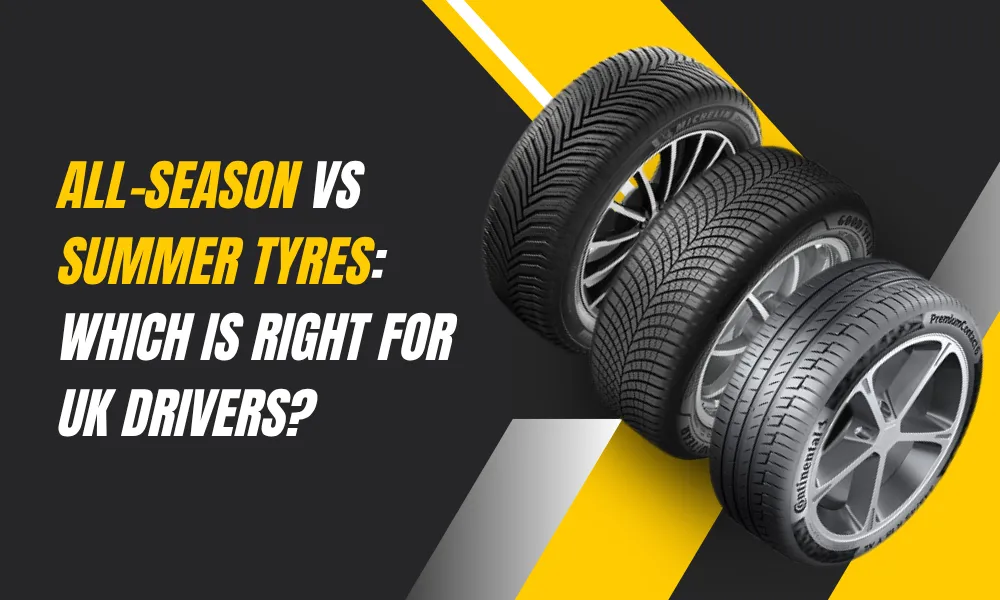
If you’ve been comparing all season tyres vs summer tyres, you’ve probably noticed that most advice online sounds vague: “it depends”, “both are good”, or “choose based on your climate.”
But for UK drivers, the decision is actually much clearer once you look at where and how you drive.
The UK’s weather is unpredictable. One week you’re driving on dry motorways in 18°C sunshine, and the next you’re dealing with freezing rain, frosty mornings, and wet country roads. That means your tyre choice affects more than just performance — it impacts braking distance, fuel economy, comfort, and most importantly, safety.
In this guide, we’ll break down the real-world difference between all season tyres vs summer tyres UK, explain the important “7°C rule”, compare costs, and help you decide which option genuinely suits your location and driving style.
What Are Summer Tyres?
Summer tyres are designed to perform best in temperatures above 7°C. They use a harder rubber compound and tread pattern optimised for warm conditions and wet roads during spring, summer, and mild autumn weather.
Benefits of Summer Tyres
Better Dry Grip
Summer tyres offer excellent road contact in warm temperatures, which improves cornering stability and steering response.
Strong Wet Performance
Despite the name, summer tyres are also very effective in heavy rain. Their tread patterns are designed to clear water efficiently and reduce aquaplaning risks.
Shorter Braking Distances
Above 7°C, summer tyres generally stop quicker than all-season tyres.
Improved Fuel Economy
The lower rolling resistance of summer tyres can slightly improve fuel efficiency.
Quieter and More Responsive
Drivers often notice a smoother, quieter ride with sharper handling.
The Problem With Summer Tyres in Cold Weather
Here’s the issue many UK drivers overlook: once temperatures drop below 7°C, summer tyre rubber begins to harden.
That means:
- Grip levels fall
- Braking distances increase
- Steering response becomes less predictable
- Wet and icy roads become riskier
This matters because from roughly October to March, many parts of the UK regularly experience temperatures below 7°C — especially in mornings and evenings.
So while summer tyres vs all season may look like a simple performance choice, climate makes a huge difference.
What Are All-Season Tyres?
All-season tyres are designed to handle a wider range of temperatures and weather conditions throughout the year.
They combine characteristics of both summer and winter tyres, using a more flexible rubber compound that stays effective in colder weather.
Most also carry an M+S (Mud and Snow) rating, and many premium options include the 3PMSF (Three Peak Mountain Snowflake) certification for winter performance.
Benefits of All-Season Tyres
Better Cold-Weather Grip
Unlike summer tyres, all-season compounds remain flexible below 7°C.
Suitable for Light Snow and Frost
They provide extra confidence during winter mornings, slush, and icy conditions.
No Seasonal Tyre Swaps
One of the biggest advantages of all season tyres vs summer is convenience. You don’t need separate winter tyres or storage costs.
Good Year-Round Versatility
For many UK drivers, especially in mixed climates, all-season tyres strike the best balance between safety and practicality.
The Trade-Off With All-Season Tyres
No tyre can dominate every condition.
Compared with dedicated summer tyres:
- All-season tyres usually offer slightly less dry grip in hot weather
- Steering may feel softer
- Braking distances can be marginally longer in warm conditions
And compared with full winter tyres:
- They won’t perform as well in heavy snow or extreme ice
Still, for much of the UK, they offer the most balanced everyday solution.
The 7°C Rule — Why It Matters More Than You Think
One of the most important factors in the summer vs all season tyres debate is the “7°C rule”.
Above this temperature:
- Summer tyres generally outperform all-season tyres
Below this temperature:
- Summer tyre rubber stiffens
- All-season tyres maintain flexibility and grip
This isn’t marketing hype — it’s basic tyre compound physics.
In the UK, temperatures regularly fall below this threshold for several months of the year, particularly:
- Early mornings
- Night driving
- Rural roads
- Northern regions
That’s why many drivers now prefer all-season options instead of running summer tyres year-round.
UK-Specific Recommendation: Which Tyre Works Best Where?
This is where the decision becomes much easier.
Southern England (London, Kent, Sussex, Essex)
If you mainly drive in southern England and do low-to-moderate mileage on urban roads or motorways, summer tyres can work well year-round.
Winters here are generally milder, and snow is relatively rare.
Best Choice:
- Summer tyres if you prioritise handling and performance
- All-season tyres if you want convenience and occasional cold-weather reassurance
Midlands, Yorkshire & Wales
This is where all season tyres vs summer tyres UK becomes less balanced.
These areas experience:
- Colder winters
- More frost
- Frequent wet conditions
- Occasional snow
Honest Recommendation:
All-season tyres are strongly recommended here for most drivers.
They provide safer cold-weather performance without needing a separate winter setup.
Scotland, Northern England & High Altitude Areas
In these regions, temperatures remain below 7°C for extended periods.
Snow, ice, and freezing rain are also much more common.
Best Choice:
- All-season tyres minimum
- Dedicated winter tyres if you regularly drive in snow-heavy areas
Using summer tyres year-round here usually isn’t the safest option.
Cost Comparison: Are All-Season Tyres Worth It?
At first glance, all-season tyres often cost slightly more upfront.
However, the total ownership cost can actually be lower because you avoid:
- Seasonal tyre changes
- Winter tyre storage
- Fitting fees twice a year
For many UK households, especially those running one car year-round, all-season tyres can make strong financial sense.
Top Picks: All-Season and Summer Tyres Worth Considering
All-season tyres:
- Michelin CrossClimate 2 — the benchmark for all-season performance. Excellent wet and dry braking, strong cold-weather grip, carries the 3PMSF symbol.
- Goodyear Vector 4Seasons Gen-3 — strong all-round performer across wet, dry, and light-snow conditions. Widely available and competitively priced.
Summer tyres:
- Continental PremiumContact 6 — excellent wet braking, low rolling resistance, well-suited to UK motorway driving.
- Pirelli Cinturato P7 — a solid balance of performance, comfort, and longevity.
All four are available through TyreSavings — enter your registration number to check fitment compatibility and compare current prices.
Quick Decision Table
|
Driver Type |
Best Option |
|
Mostly South England driving |
Summer tyres |
|
Mixed UK weather year-round |
All-season tyres |
|
Frequent motorway commuting |
Either, depending on region |
|
Cold mornings & rural roads |
All-season tyres |
|
Scotland or hilly regions |
All-season or winter tyres |
|
Performance driving focus |
Summer tyres |
|
Want convenience & one tyre setup |
All-season tyres |
So, Which Should You Choose?
If you live in southern England, drive mainly in cities, and value sharper handling, summer tyres still make sense.
But for most UK drivers — especially in the Midlands, Wales, Northern England, and Scotland — all-season tyres are often the smarter real-world choice.
They handle the UK’s unpredictable climate more confidently and remove the hassle of switching tyres every season.
That’s why searches for all season tyre vs summer tyre have grown rapidly in recent years.
Compare Prices Easily With TyreSavings
Once you’ve decided between summer and all-season tyres, the next step is finding the right fit at the best price.
TyreSavings lets you:
- Enter your registration number
- Compare summer and all-season options side by side
- Browse leading brands
- Find local fitting centres across the UK
Not sure which suits your car and location? Enter your reg on TyreSavings and filter by summer or all-season tyres to compare prices instantly.
Frequently Asked Questions
Are all-season tyres better than summer tyres in the UK?
For many UK drivers, yes. All-season tyres perform better in cold temperatures, frost, and mixed weather conditions commonly seen in the UK. Summer tyres are usually better only in consistently warm conditions above 7°C.
Can I use summer tyres all year in the UK?
Yes, but it depends on where you live. In southern England, summer tyres can work year-round. However, in colder regions, grip and braking performance drop significantly during winter.
What happens to summer tyres below 7°C?
Below 7°C, the rubber compound hardens, reducing traction, braking performance, and handling stability.
Are all-season tyres good in snow?
They can handle light snow and slush better than summer tyres, especially tyres with a 3PMSF rating. However, they are still not as capable as dedicated winter tyres in severe snow.
Do all-season tyres last longer than summer tyres?
It depends on driving style and conditions. Many premium all-season tyres offer excellent lifespan, though aggressive summer driving may wear them faster than dedicated summer tyres.
Are all-season tyres more expensive?
Usually slightly more upfront, but they can save money long-term by avoiding seasonal tyre swaps and storage costs.