
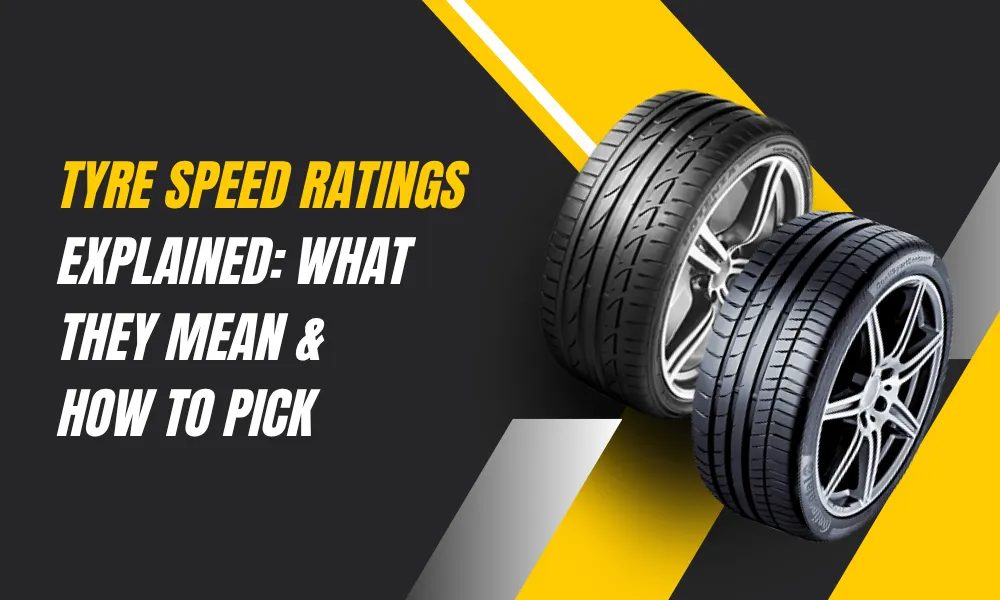
Tyre Speed Ratings Explained: What They Mean & How to Pick
When it comes to choosing the right tyres for your car, most drivers focus on size or price — but one detail often overlooked is the tyre speed rating. This little letter at the end of your tyre code (e.g., 205/55 R16 91V) carries a lot of important information about how your tyres perform at different speeds.
Understanding tyre speed ratings isn’t just about getting the fastest tyres possible — it’s about safety, handling, and making sure your tyres comply with UK regulations. In this guide, we’ll explain what tyre speed ratings are, how to read them, and how to choose the right one for your car.
What is a Tyre Speed Rating?
A tyre speed rating indicates the maximum speed a tyre can safely sustain under its recommended load. Every tyre sold in the UK comes with a speed rating — usually shown as a letter after the tyre size, for example: 205/55 R16 91V.
- The number (91) is the load index — how much weight the tyre can carry.
- The letter (V) is the speed rating — the maximum speed the tyre is designed to handle safely.
It’s important to note that a tyre speed rating doesn’t mean you should drive at that speed; it simply indicates the tyre’s performance limit. Using tyres with the correct speed rating ensures stability, braking performance, and heat tolerance — especially at higher speeds or under heavy loads.
Understanding Tyre Speed Rating Letters
Tyre speed ratings are represented by letters, from Q to Y, each corresponding to a maximum speed. Here’s a UK-focused speed rating tyres table:
|
Letter |
Maximum Speed (mph) |
Maximum Speed (km/h) |
Common Use |
|
Q |
99 |
160 |
Standard family cars |
|
R |
106 |
170 |
Small cars |
|
S |
112 |
180 |
Mid-range cars |
|
T |
118 |
190 |
Family cars, budget tyres |
|
H |
130 |
210 |
Saloon, hatchback |
|
V |
149 |
240 |
Sporty cars, high-performance |
|
W |
168 |
270 |
High-performance cars |
|
Y |
186 |
300 |
Supercars |
|
Z |
149+ |
240+ |
Ultra high-speed tyres |
Tip: Always follow your car manufacturer’s recommended speed rating on tyres. Installing tyres with a lower rating can affect handling, safety, and even insurance coverage.
This tyre speed rating chart makes it easy to see which tyres are suitable for your car and driving style.
Why Tyre Speed Ratings Matter
There are three main reasons why tyre speed ratings UK drivers should care about:
1. Safety
A tyre's speed rating affects its ability to handle heat, resist tyre wear, and maintain grip at higher speeds . Using tyres with a lower rating than recommended can lead to overheating and reduced control, especially on motorways. .
2. Performance
Tyres with a higher speed rating generally offer better handling, cornering stability, and braking. This doesn’t mean you’ll drive faster — it means your car behaves more predictably and safely.
3. Legal & Insurance Considerations
In the UK, your tyres must meet the specifications in your vehicle handbook. Fitting a lower-rated tyre could be seen as non-compliant, potentially affecting insurance claims after an accident.
How to Choose the Right Tyre Speed Rating
Choosing the correct speed rating for tyres depends on a combination of your car, driving style, and conditions:
1. Check the Manufacturer’s Recommendation:
Your car manual or the sticker inside the driver’s door lists the recommended tyre size and speed rating UK drivers should use.
2. Consider Your Driving Habits
- City driving: Lower-speed ratings (Q, R, S) are often sufficient.
- Motorway or long-distance driving: Higher-speed ratings (H, V) offer better stability.
- Performance driving: Match or exceed the manufacturer’s recommendations for optimal handling.
3. Seasonal Conditions:
Winter tyres or all-season tyres may come with different tyre speed ratings. Make sure the rating suits your typical driving conditions.
4. Upgrading Tyres:
Some drivers choose higher-rated tyres for enhanced performance. While this can improve handling, don’t exceed your car manufacturer’s recommended rating without checking compatibility.
Common Myths About Tyre Speed Ratings
Myth 1: Higher Rating = Faster Car
Not true. The speed rating on tyres indicates capability, not the car’s top speed.
Myth 2: You Can Mix Speed Ratings on One Car
All four tyres should ideally match the recommended speed ratings on tyres.Mixing ratings can affect balance and stability. .
Myth 3: Speed Ratings Only Matter for Sports Cars
Even standard family cars benefit from tyres rated correctly for safety, handling, and braking — especially on UK motorways.
Tyre Speed Ratings & MOT / Legal Considerations
In the UK:
- Fitting tyres below the manufacturer’s recommended speed rating of the tyres can affect MOT compliance.
- Insurance claims may be compromised if lower-rated tyres contributed to an accident.
- Always use the tyre speed rating UK specifies for your vehicle.
Quick Tip: Keep a copy of your car’s tyre specifications handy when buying new tyres, either online or at a garage.
Quick Tips to Remember
- Always follow the car manufacturer’s recommended speed rating for tyres.
- Don’t downgrade tyres — safety and insurance could be affected.
- Match tyres to your driving style and UK road conditions.
- Use the tyre speed rating chart to compare different options.
- Check tyre labels before purchase for speed ratings on tyres.
- Rotate tyres regularly to ensure even wear across all four — see our tyre rotation guide for the recommended schedule.
Conclusion
Understanding tyre speed ratings is essential for every UK driver. It ensures your car handles safely, performs efficiently, and stays within legal and insurance requirements. Whether you’re choosing new tyres for city commuting, long motorway journeys, or performance driving, knowing how to read the speed rating on tyres makes a real difference.
If you’re unsure which speed rating tyres are right for your car, check your manufacturer’s guide or explore the full range of tyres at TyreSavings — the right choice keeps you safe and saves you money in the long run.
FAQs: Tyre Speed Ratings UK
Q1: Can I fit tyres with a higher speed rating?
A1: Yes, you can fit tyres with a higher speed rating than recommended. They offer better handling and stability, but won’t make your car faster.
Q2: Can I fit tyres with a lower speed rating?
A2: No. Using tyres with a lower speed rating than your manufacturer recommends can reduce safety, affect handling, and may invalidate insurance or MOT compliance.
Q3: How do I know the speed rating of my tyres?
A3: The speed rating on tyres is the letter at the end of your tyre code, for example, 205/55 R16 91V.
Q4: Where can I find my tyre’s rating?
A4: Check your tyre sidewall, car handbook, or the sticker inside the driver’s door. You can also consult a garage or tyre supplier.
Q5: What happens if I choose a tyre with the wrong speed rating?
A5: It can affect safety, handling, braking performance, and insurance claims. Using a lower-rated tyre may also fail MOT requirements.