

Can You Mix Tyre Brands on Your Car? UK Rules and Risks
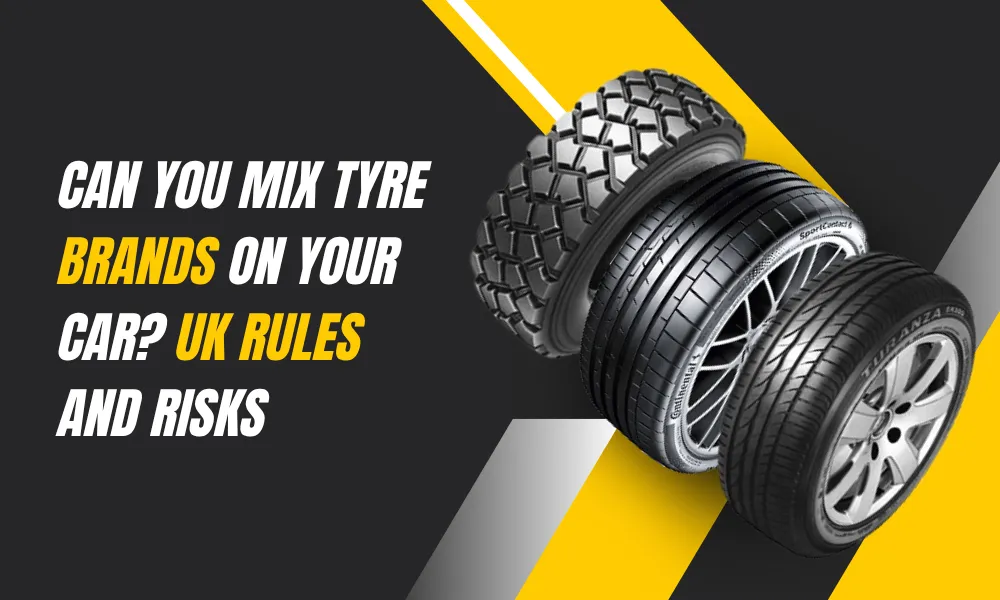
One tyre got punctured. You head to a garage expecting a quick replacement — but there’s a problem. Your exact tyre model is out of stock.
Now you’re asking the same question thousands of UK drivers search every month: can you mix tyre brands on your car safely and legally?
The short answer is yes — in many cases, mixing tyre brands is legal in the UK. But that does not always mean it’s the safest option. There are also specific tyre mixing rules that every driver should know before fitting different tyres on the same car in the UK.
In this guide, we’ll explain the actual UK rules, the real-world risks, and the safest way to handle tyre replacement if you cannot find an exact match.
Is It Legal to Mix Tyre Brands in the UK?
Yes — in most situations, it is legal to mix different tyre brands on your vehicle.
For example:
- Michelin tyres on the front and Bridgestone tyres on the rear
- Continental on one axle and Goodyear on another
- Different tread patterns front to rear
These setups are generally legal.
However, there are important exceptions.
What Is Illegal?
Under UK regulations, you must not mix:
- Radial and cross-ply tyres together
- Different tyre constructions on the same axle
- Tyres with incompatible sizes or specifications that make the vehicle unsafe
This means you cannot combine fundamentally different tyre types simply because they fit the wheel.
There’s also a major safety issue with using different sizes or mismatched specifications on the same axle. Even if it is not specifically prohibited in every scenario, it can negatively affect braking, steering, stability, and MOT compliance.
The Simple Rule Most Experts Recommend
If you absolutely must mix tyres, follow this setup:
Front axle:
Both front tyres should match:
- Same brand
- Same tread pattern
- Same size
Rear axle:
Both rear tyres should also match each other.
The front and rear axle can technically use different brands, but each axle should remain consistent.
This is considered the safest and most stable setup for everyday driving.
Why Mixing Tyres Can Be Risky
Even when mixing tyres legal UK rules allow it, there are still performance and safety concerns.
Different tyres are designed differently. Even if the size matches, two tyres can behave very differently on the road.
1. Uneven Braking Performance
One tyre may grip harder during braking while the other loses traction sooner.
This can cause:
- The vehicle pulling to one side
- Longer stopping distances
- Reduced control during emergency braking
This becomes especially noticeable in wet weather.
2. Unpredictable Handling
Different tyre brands UK manufacturers use different rubber compounds and tread designs.
That means:
- One tyre may respond faster to steering input
- One tyre may disperse water better
- One tyre may lose grip earlier in corners
The result can be inconsistent handling, particularly at motorway speeds or during sudden manoeuvres.
3. Uneven Tyre Wear
When tyres behave differently, they often wear differently too.
Mixed tyres can create:
- Faster wear on one side
- Irregular tread patterns
- Reduced overall tyre lifespan
In many cases, drivers end up replacing tyres sooner than expected.
4. Insurance Concerns
Although mixing tyres is usually legal, insurers may still question it after an accident.
If an investigation finds:
- Unsafe tyre combinations
- Incorrect speed ratings
- Poor tyre condition
…the insurer could argue negligence contributed to the incident.
That does not automatically mean your claim will be rejected, but it can complicate matters.
Understanding the UK Tyre Mixing Rules
When discussing tyre mixing rules, there are four key things that matter most.
1. Tyre Size
Both tyres on the same axle should always be the same size.
Example:
- 225/45 R17 on both front tyres
Different sizes on the same axle can destabilise the vehicle and negatively affect braking systems like ABS and traction control.
2. Speed Rating
Every tyre has a speed rating marked on its sidewall.
Examples include:
- V
- W
- Y
If your manufacturer requires a certain rating, your replacement tyre should meet or exceed it.
Premium tyre brands like Michelin, Continental, and Bridgestone clearly display these ratings, making it easier to find compatible replacements.
3. Load Index
The load index indicates how much weight the tyre can safely carry.
Using mismatched load ratings can:
- Affect handling
- Increase wear
- Create safety risks under heavy loads
4. Tread Pattern
Different tread patterns channel water differently.
One tyre may resist aquaplaning better than another, which can create imbalance in wet conditions.
That is why matching tread patterns across the same axle is strongly recommended.
When Mixing Tyres Is Understandable
There are situations where mixing tyres happens for completely practical reasons.
Emergency Replacement
If a tyre fails unexpectedly and the matching model is unavailable, fitting a temporary alternative may be necessary.
Discontinued Tyre Models
Some tyre models are eventually phased out.
If your existing tyre is discontinued, finding an exact replacement may be difficult.
Budget Constraints
Sometimes replacing all four tyres at once simply is not realistic.
In these cases, it is better to:
- Replace tyres in axle pairs where possible
- Match specifications carefully
- Plan to standardise all four tyres later
Where Should the Better Tyres Go?
A common misconception is that the newest tyres should go on the front because steering happens there.
In reality, most tyre manufacturers recommend fitting the better tyres on the rear axle.
Why?
Because rear grip loss is harder for most drivers to control.
Better rear tyres help reduce:
- Oversteer
- Rear-end instability
- Spin risk in wet conditions
Even on front-wheel-drive vehicles, rear stability matters greatly.
Can You Mix Premium and Budget Tyres?
Technically, yes.
Many drivers run combinations like:
- Premium fronts with budget rears
- Budget fronts with premium rears
But this can exaggerate handling imbalance because performance differences become more pronounced.
Premium tyres often:
- Brake shorter
- Grip better in rain
- React more consistently
Mixing very different performance levels may create unpredictable behaviour.
What About Winter and Summer Tyres?
This is another area where drivers get confused.
Mixing seasonal tyre types is strongly discouraged.
For example:
- Summer tyres on front
- Winter tyres on rear
This can create severe imbalance during cold or wet conditions.
If using winter tyres, ideally all four tyres should match.
The Penalties for Illegal Tyres in the UK
Driving with illegal tyres can carry serious penalties.
You could face:
- Up to £2,500 fine per illegal tyre
- 3 penalty points per illegal tyre
That means four illegal tyres could theoretically result in:
- £10,000 in fines
- 12 penalty points
Regular tyre checks are essential.
The Best Solution: Avoid Mixing If Possible
While mixing tyres is often legal, it is rarely ideal.
The safest approach is:
- Matching tyres across each axle
- Correct size
- Correct speed rating
- Correct load index
If possible, replacing tyres in pairs is always recommended.
Finding the Exact Match Matters
One of the biggest frustrations drivers face is simply finding the same tyre quickly.
That is where TyreSavings can help.
TyreSavings supplies over 3 million tyres every year, making it far more likely you will find the exact same tyre brand and model already fitted to your vehicle.
Instead of settling for a mixed setup, you can search by your registration number and match your existing tyre specification accurately.
This helps avoid:
- Handling inconsistencies
- Uneven wear
- Safety concerns
- The stress of incompatible replacements
Before mixing brands, it is worth checking whether your exact tyre is already available.
Final Thoughts
So, can you mix tyre brands on your car?
Legally, usually yes.
Safely? Sometimes — but only if the tyres are compatible and fitted correctly.
If you absolutely must mix tyres:
- Keep matching pairs on each axle
- Match size, speed rating, and load index
- Avoid mixing construction types
- Replace with identical tyres whenever possible
The safest option is always consistency.
Before settling for mixed tyres, check whether your exact match is available through TyreSavings. With a huge range of stock and easy reg-number search, finding the correct replacement is often easier than expected.
FAQs
Is it illegal to have different tyres on the same car in the UK?
No, using different tyre brands on the same car is not automatically illegal in the UK. However, mixing radial and cross-ply tyres improperly is illegal, and mismatched tyre sizes or ratings can create safety and MOT issues.
Can I mix tyre brands on the same axle?
It is technically possible, but not recommended. The safest setup is matching tyres on the same axle, including brand, tread pattern, and size.
Is mixing tyres bad for handling?
Yes, mixed tyres can affect braking, cornering, and wet-weather grip because different tyres perform differently under the same conditions.
Should the best tyres go on the front or rear?
The best tyres should usually go on the rear axle to improve vehicle stability and reduce the risk of oversteer.
Can mixing tyres affect insurance?
Potentially, yes. If mixed tyres contribute to unsafe vehicle behaviour during an accident investigation, insurers may raise concerns about negligence.