

Does Tyre Brand Really Matter for Everyday Driving?
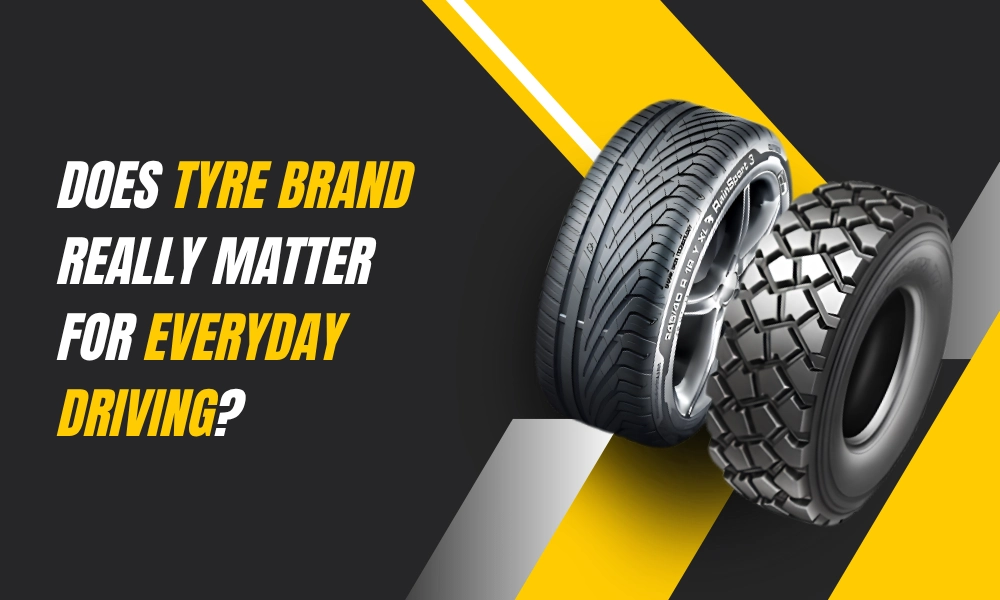
Michelin, Continental, Goodyear and Pirelli are names most drivers recognise.
But when you start shopping for new tyres, you'll probably come across many other brands too. Some may be considerably cheaper, and some may be names you've never heard of before.
That raises an obvious question:
Does tyre brand really matter if you mainly use your car for normal everyday driving?
Brand can matter, but it shouldn't drive your entire buying decision.
For everyday drivers, the better approach is to compare the individual tyre, correct vehicle specification, tyre-label information, intended use and price rather than assuming the most recognisable brand is automatically the right choice.
Here's what to look at before paying more for a particular name on the sidewall.
Why Are Some Tyre Brands So Much More Expensive?
Tyre prices can vary significantly even when the tyres appear to be the same size.
Part of that difference can be linked to the manufacturer and how it develops and positions its products.
Major tyre manufacturers may invest extensively in areas such as:
- research and development
- tyre compounds
- tread design
- testing
- manufacturing technology
- motorsport and specialist development
- original-equipment programmes with vehicle manufacturers
- new tyre technologies
Brand recognition and market positioning can also influence price.
However, a higher price doesn't mean every driver automatically needs that tyre.
The question should be:
What extra features am I getting for the extra money, and do they matter for how I drive?
Related: How much do new tyres cost in the UK?
Premium, Mid-Range and Budget Tyres: What's the Difference?
You'll often see tyres grouped broadly into three categories. For more detail, see our guide to budget vs premium tyres.
Premium Tyres
Premium manufacturers include many of the world's best-known tyre companies. Depending on availability and tyre size, shoppers may encounter brands such as:
These manufacturers typically offer extensive product ranges covering everything from everyday passenger cars to performance vehicles, SUVs, EVs and specialist applications.
Premium tyres may appeal to drivers looking for particular technologies, OE approvals, performance characteristics or simply a manufacturer they already know and trust.
Mid-Range Tyres
Mid-range tyres sit between premium and budget pricing.
They appeal to drivers looking for a balance between purchase price and specific tyre characteristics without paying premium-brand prices.
A manufacturer's exact positioning can vary by market and product, so don't treat "mid-range" as an official performance classification.
Budget Tyres
Budget tyres are generally positioned primarily around affordability.
TyreSavings carries a broad selection of lower-priced tyre brands, including Churchill, Dynamo, RoadX, Infinity, Hifly, Headway, Admiral, Aoteli, Compasal, Keter, Kingboss and Kpatos, depending on the size and current availability.
These brands give price-conscious drivers considerably more choice.
But don't interpret the word budget as a complete assessment of an individual tyre.
You still need to check its specifications and characteristics.
Related:Best budget tyre brands in the UK andcheap tyres vs budget tyres.
Does a Premium Brand Automatically Mean a Better Tyre?
Not in every respect and not for every driver.
This is where tyre shopping becomes more interesting.
You might find:
- Tyre A: premium brand, higher price
- Tyre B: less familiar brand, lower price
It's easy to assume Tyre A is automatically the correct choice.
But before deciding, compare what you're actually buying.
Look at:
- wet-grip classification
- fuel-efficiency classification
- external rolling noise
- load index
- speed rating
- tyre type
- vehicle requirements
- intended application
- price
The tyre label is particularly useful because it gives you standardised information about certain characteristics of the individual tyre.
It doesn't tell you everything about tyre performance, but it gives you more information than the brand name alone.
Know more: How to read a tyre label (UK guide)
Can an Unfamiliar Tyre Brand Still Be Worth Considering?
Yes.
Many motorists first encounter brands when comparing tyres online. Not recognising a manufacturer doesn't automatically mean a tyre isn't suitable for your vehicle.
Instead of immediately rejecting an unfamiliar brand, investigate the tyre. Ask:
- Is it the correct size?
- Does it have the appropriate load and speed ratings?
- What does its tyre label show?
- Is it the right tyre type for my vehicle and driving?
- How does it compare in price with alternatives?
- Does my car have manufacturer-specific tyre requirements?
This turns an unfamiliar brand from an unknown quantity into something you can actually compare.
Related: Tyre brands worth buying
When Does Tyre Brand Matter More?
In some cases, the manufacturer and a specific tyre model deserve more consideration.
Performance Cars
Performance vehicles place significantly different demands on tyres than ordinary urban cars. Vehicle manufacturers may also specify or approve particular tyres.
In these situations, choosing tyres purely on price is a poor way to shop.
Luxury Cars
Some luxury vehicles use manufacturer-approved tyre fitments designed around particular characteristics. If your existing tyre carries an OE marking, check the vehicle manufacturer's recommendation before switching.
Electric Vehicles
EVs can have particular tyre requirements related to factors such as vehicle weight and load capacity. Don't assume any tyre in the correct physical size is automatically suitable.
SUVs and Heavier Vehicles
Load requirements become particularly important. Again, start with the correct specification rather than brand alone.
Related: Best SUV tyres in the UK and what is a reinforced tyre?
High-Mileage Drivers
If you cover a substantial number of miles every year, relatively small differences in tyre characteristics may matter more over the tyre's life. A driver covering 20,000 miles annually may evaluate the price difference differently from someone covering 3,000 miles.
Enthusiast and Performance Driving
If handling characteristics are a major priority, you'll probably want to research the specific tyre model much more deeply than someone who mainly drives to the supermarket and back.
When Might Brand Matter Less?
Imagine you drive a modest family hatchback. You cover 4,000 miles annually. Most journeys involve:
- commuting a few miles
- shopping
- school runs
- occasional weekend trips
You aren't trying to maximise performance on demanding roads.
In this situation, paying substantially more purely because you recognise the manufacturer may not necessarily give you the best value.
A suitable lower-priced tyre may meet your priorities.
That doesn't mean: "Everyday drivers should buy budget tyres."
It means: Everyday drivers should compare suitable tyres before deciding whether paying more for a particular brand provides something they actually value.
Does Brand Matter for Wet-Weather Driving?
The individual tyre matters.
Instead of assuming every tyre from Brand A must perform better in wet conditions than every tyre from Brand B, look at the information available for the specific products you're considering.
Wet grip is one of the characteristics displayed on the tyre label.
This lets you compare suitable tyres using a standardised classification.
For UK motorists, wet-weather characteristics are understandably an important part of the buying decision.
But remember that the label covers specific standardised characteristics. It isn't an overall score for everything a tyre can do.
Related: What is aquaplaning and how UK drivers can prevent it
Does Brand Matter for Fuel Economy?
Again, look at the individual tyre.
Tyres vary in rolling resistance, which contributes to the fuel-efficiency classification displayed on the tyre label.
A premium brand isn't automatically the highest-rated option available in every tyre size.
If fuel efficiency is important to you, compare the actual classifications of the tyres you're considering.
This may be particularly relevant if you cover high annual mileage.
If you drive relatively few miles, you may weigh the potential efficiency difference against the upfront price difference differently.
Does Brand Matter for Tyre Noise?
Don't rely on brand assumptions here either.
The tyre label provides information about external rolling noise.
Compare the actual figure for individual tyres.
Also remember that external rolling noise isn't the same as the noise you experience inside the vehicle.
If cabin comfort is especially important to you, it may be worth doing additional tyre research.
Know more: Tyre noise explained
What About Tyre Lifespan?
This is where buyers should avoid making broad assumptions.
You can't reliably determine how many miles a tyre will last based on its brand or purchase price alone.
Tyre life is affected by factors including:
- driving style
- annual mileage
- tyre pressure
- wheel alignment
- vehicle weight
- road conditions
- tyre construction and compound
- maintenance
- damage
A more expensive tyre shouldn't automatically be assumed to last a specific number of miles longer than a cheaper alternative.
If longevity is a top priority, research the specific tyre model rather than relying solely on brand reputation.
Related:
Is It Worth Paying £20 or £30 More Per Tyre for a Premium Brand?
Sometimes.
But calculate what that difference means across the vehicle.
Suppose you're comparing:
|
Option |
Price per tyre |
Four tyres |
|
Budget |
£55 |
£220 |
|
Mid-range |
£75 |
£300 |
|
Premium |
£105 |
£420 |
Illustrative prices only.
The difference between the budget and premium options is:
£200 across four tyres.
Now the question becomes much clearer:
What does the additional £200 give you, and do you value those differences?
Perhaps the premium tyre has characteristics that matter for your driving.
In that case, paying more may make sense.
But if a suitable budget or mid-range option already provides the characteristics you need, you may decide to keep the additional £200 in your pocket.
That's a much more useful comparison than simply asking:
"Which brand is best?"
Related: Is it cheaper to buy four tyres together?
Should Low-Mileage Drivers Pay for Premium Brands?
Low-mileage drivers should consider their usage carefully.
If you cover only a few thousand miles per year, you may not receive the same economic benefit from characteristics associated with high-mileage use as someone driving tens of thousands of miles.
That doesn't make premium tyres unnecessary.
You might still value:
- wet-weather characteristics
- specific vehicle approvals
- refinement
- a particular tyre technology
- a specific manufacturer
But mileage should factor into your value calculation.
See our dedicated guide: Are Premium Tyres Worth the Extra Money for Low-Mileage Drivers?
Does an Older Car Need a Premium Tyre Brand?
Not necessarily.
But an older car doesn't automatically mean it should be on the cheapest tyres available either.
The vehicle still requires correctly specified tyres.
Once those requirements are satisfied, think about:
- annual mileage
- how long you'll keep the car
- type of driving
- tyre price
- the characteristics you value
A 12-year-old car covering 15,000 motorway miles annually may justify a very different tyre choice from a 12-year-old second car covering 2,000 local miles.
Our guide, how much should you spend on tyres for an older car?, explores this decision in more detail.
Should You Stick With the Brand Already Fitted to Your Car?
Not automatically.
If you're happy with the current tyres, buying the same ones again may be an easy and sensible choice.
But you may have other compatible options.
When it's time to replace them, search for suitable tyres and compare what's available.
Another manufacturer may offer:
- a lower price
- tyre-label characteristics you prefer
- a different seasonal option
- a product better suited to your current driving
If your vehicle has specific OE or manufacturer-approved tyre requirements, check those before changing.
See: Should You Buy the Same Tyres That Came With Your Car?
What About Mixing Different Tyre Brands?
Changing brand when replacing tyres isn't the same question as mixing different tyres across the vehicle.
If you're replacing only one or two tyres, consider the tyres that remain fitted.
Differences in:
- tyre construction
- tread pattern
- tread depth
- tyre type
- characteristics
can matter.
Legal and vehicle-manufacturer requirements also apply.
Read our dedicated guide, can you mix tyre brands on your car? UK rules and risks before deciding.
Related: Replace tyres in pairs or all four?
How Should You Compare Two Different Tyre Brands?
Use this process.
Step 1: Forget the Logo for a Moment
First, confirm that both tyres are actually suitable for your vehicle.
Step 2: Check the Tyre Size
For example:
205/55 R16
If you're unsure where to find it, see how to read a tyre sidewall.
Step 3: Compare Load and Speed Ratings
Make sure you're comparing appropriate specifications.
Step 4: Check the Tyre Label
Compare:
- wet grip
- fuel efficiency
- external rolling noise
Step 5: Consider Tyre Type
Are you comparing:
- summer with summer?
- all-season with all-season?
- run-flat with run-flat?
- standard load with the appropriate load specification?
Make sure it's a meaningful comparison.
Step 6: Consider Your Driving
Think about:
- annual mileage
- motorway use
- urban driving
- seasonal conditions
- vehicle type
- performance requirements
Step 7: Compare the Price Difference
Now ask whether the additional cost buys characteristics you actually value.
Step 8: Check Vehicle-Manufacturer Requirements
Particularly for specialist, performance, luxury, EV, AWD and other vehicles with specific tyre requirements.
Brand vs Tyre Label vs Price: What Matters Most?
Don't choose only one.
Think of the buying decision as four pieces:
- Vehicle compatibility: The tyre needs to suit your car.
- Individual tyre characteristics: Use the label and available product information.
- Your driving requirements: A motorway commuter and an occasional urban driver may reasonably make different choices.
- Price: Once you've identified suitable tyres, decide whether the additional characteristics of a more expensive option justify the difference for you.
Brand can then provide additional context, but it shouldn't override everything else.
Know more: How to choose the right tyres for your car (UK)
How TyreSavings Helps You Compare Different Brands
One advantage of shopping across multiple manufacturers is that you don't have to decide on a brand before you start.
Search by Registration
Enter your vehicle registration to find suitable tyres. Here's how it works: use your vehicle registration to find the right tyres.
Or Search by Tyre Size
If you know your size, search directly using the sidewall information through our tyre sizes page.
Related: Buying tyres by size vs registration
Compare Different Price Points
Depending on your tyre size and availability, you may see options from budget, mid-range and premium manufacturers.
Compare the Individual Tyres
Look beyond the logo and compare the available specifications, tyre-label information and price.
Choose According to Your Driving
A premium tyre may be worth the extra cost. Or a less expensive option may meet your needs.
Arrange Local Fitting
Once you've selected your tyres, choose a participating local tyre fitter and arrange your fitting.
Related:
- Buy Tyres Online And Book Local Fitting
- How To Choose The Right Tyre Fitter Near You
- Tyre Fitting Cost Guide
So, Does Tyre Brand Really Matter for Everyday Driving?
Yes, brand can matter, but it shouldn't be the only reason you choose a tyre.
Established manufacturers may offer extensive research, technologies, OE relationships and products developed for particular applications.
But everyday drivers shouldn't automatically assume:
famous brand = right tyre
or
unfamiliar brand = wrong tyre.
Start with what your vehicle actually requires.
Then compare the individual tyres according to:
specification + tyre-label information + intended use + your driving + price.
For some drivers, that process will lead to a premium tyre.
For others, a suitable mid-range or budget option may offer better value.
The goal isn't to buy the most expensive brand you recognise.
It's to buy a tyre that makes sense for your car, your driving and your budget.
Compare Tyre Brands for Your Car
Enter your vehicle registration or tyre size on TyreSavings to see suitable tyres across multiple brands and price points.
Compare the options available for your vehicle before deciding how much the name on the sidewall matters to you.
Frequently Asked Questions
1. Does tyre brand really make a difference?
It can. Manufacturers differ in product development, technologies, ranges and intended applications. However, you should compare the individual tyre's specification and characteristics rather than judging suitability from the brand name alone.
2. Are premium tyre brands worth the money?
They can be, depending on the individual tyre, vehicle and characteristics you value. The extra cost won't necessarily offer the same value to every driver. See our guide on budget vs premium tyres.
3. Are budget tyre brands suitable for everyday driving?
A suitable budget tyre may be an option for everyday driving if it meets the relevant vehicle requirements and suits your needs. Compare individual products rather than assuming all budget tyres are the same.
4. Is an unfamiliar tyre brand unsafe?
You can't determine whether a tyre is suitable simply from whether you recognise its brand. Check that it meets the appropriate requirements for your vehicle and review the available product and label information.
5. Should I buy Michelin, Continental, Goodyear or a cheaper tyre?
Start by finding compatible tyres in your size, then compare the individual products, label information, intended use and prices. The right choice depends on your vehicle and priorities, not brand recognition alone.
6. Do expensive tyres always last longer?
You can't assume a fixed lifespan from price alone. Tyre wear is influenced by the individual tyre, driving style, mileage, pressure, alignment, road conditions, vehicle and maintenance.
7. Should all four tyres be the same brand?
There are important considerations when mixing tyres, including tyre type, construction, axle fitment and vehicle requirements. Check the UK tyre mixing rules and vehicle-manufacturer guidance before mixing tyres.